



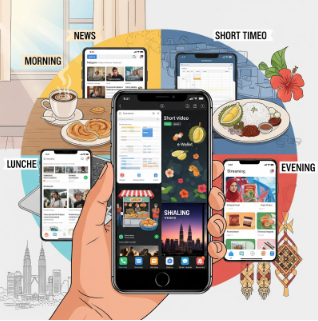
Smartphone usage in Malaysia has reached an all-time high. From morning alarms to nighttime scrolling, mobile apps guide routines, conversations, and even decision-making.
This article explores how apps influence Malaysian behaviour and why understanding these patterns is key to improving digital safety.
1. Morning: The Digital Wake-Up Call
Many Malaysians begin their day by:
- Checking WhatsApp
- Reviewing news
- Opening banking apps
- Scanning social media updates
This immediate digital immersion sets the tone for the rest of the day.
2. Work & Productivity Apps Dominate Daytime
Remote work has normalized tools like:
- Google Workspace
- Zoom
- Microsoft Teams
- Notion
- Telegram for internal communication
These apps boost productivity—but also increase data-sharing risks when used improperly.
3. Lunch Break = Micro-Entertainment Window
Malaysia has a unique pattern: short entertainment sessions between work gaps.
Examples:
- Short video apps
- Music streaming
- E-wallet games
- Simple mobile games
This micro-entertainment behaviour makes users vulnerable to impulsive downloads from unknown sources.
4. Evening: Family Time Goes Digital
Households share:
- Recipe apps
- Shopping apps
- Streaming platforms
- QR-based payment systems
This creates a blended digital ecosystem where one unsafe app can compromise an entire family if devices are shared.
5. The Risk Hidden Inside Daily App Usage
Most Malaysians download apps casually, without evaluating:
- Permissions
- Developer identity
- Update cycles
- Security signatures
- User reviews
This leads to infections from unsafe APKs and phishing apps.
6. The Digital Hygiene Checklist for Malaysians
To remain safe, users should follow:
- Delete unused apps monthly
- Avoid APKs sent via messaging apps
- Update OS regularly
- Check developer names carefully
- Cross-check download legitimacy via trusted digital resources like: https://my.bossku.club/
7. The Future: Smarter, More Secure Digital Routines
Malaysia’s digital future depends on users developing healthier app habits. Awareness, caution, and responsible downloading will reduce cyber risks significantly.
